

In ‘Big Bad Wolf,’ Sculptor Kendra Haste Contends with Conservation and Rewilding
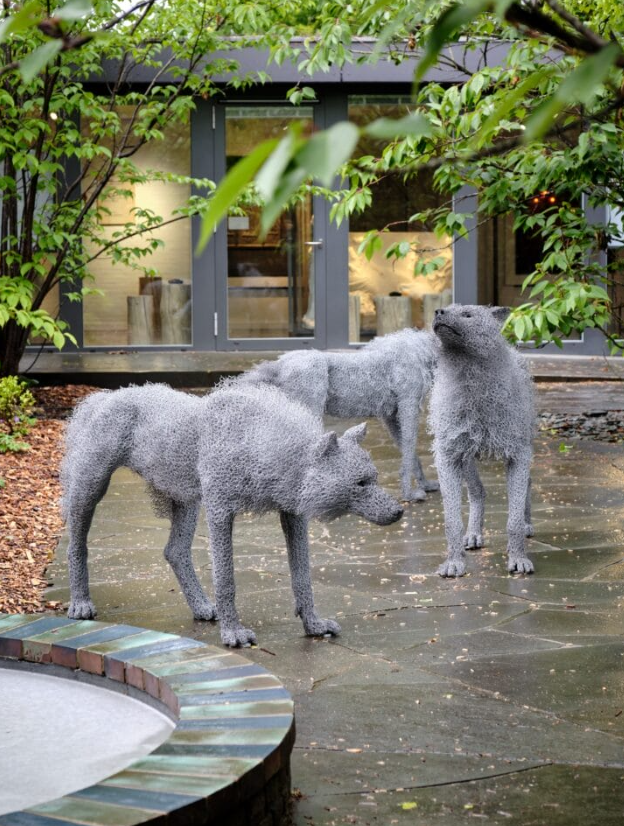
From a simple material, Kendra Haste brings us face-to-face with striking sculptures of wild animals. Known for her use of galvanized wire to create life-size portraits of everything from calm elephants to alert deer to a family of boars, the British artist is fascinated by what she describes as the “essence and character” of each creature.
The artist’s solo exhibition, Big Bad Wolf at the Iron Art Casting Museum Büdelsdorf, is Haste’s first in Germany and continues her exploration of wildlife through eleven recent works that bridge the animals’ world and ours. Haste says, “I try to capture the living, breathing model in a static 3D form and convey its emotional essence without slipping into sentimentality or anthropomorphism.”
If you’ve visited the Tower of London in the past fifteen years, you also may have seen Haste’s permanent display of sculptures inspired by the Royal Menagerie, technically the city’s first zoo. The building housed a collection of animals between the 1200s and 1835, many of which were gifted to kings and queens.
Haste’s life-size animals are installed near where they were kept and nod to real denizens, like an elephant sent by the King of France in 1255 and what was presumably a polar bear shipped from Norway around the same time. The works were initially slated for a 10-year exhibition but now permanently on view in the much-loved historic attraction.
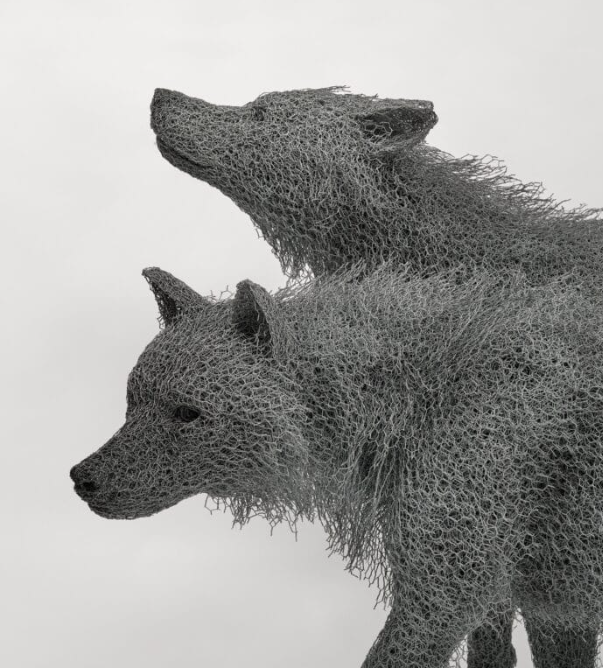
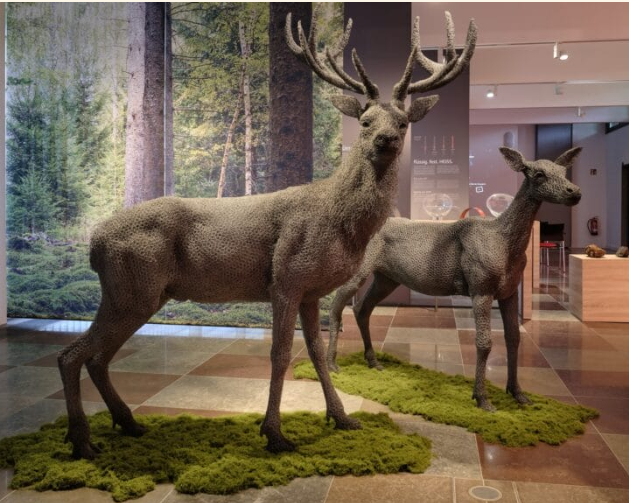
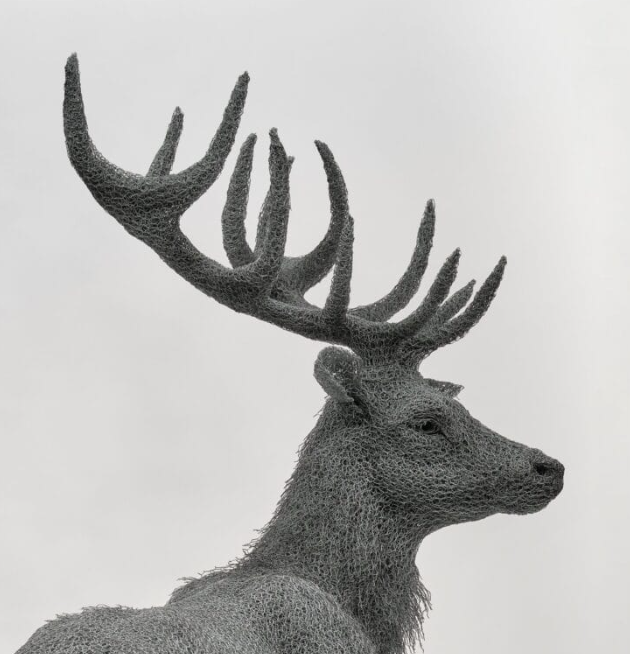
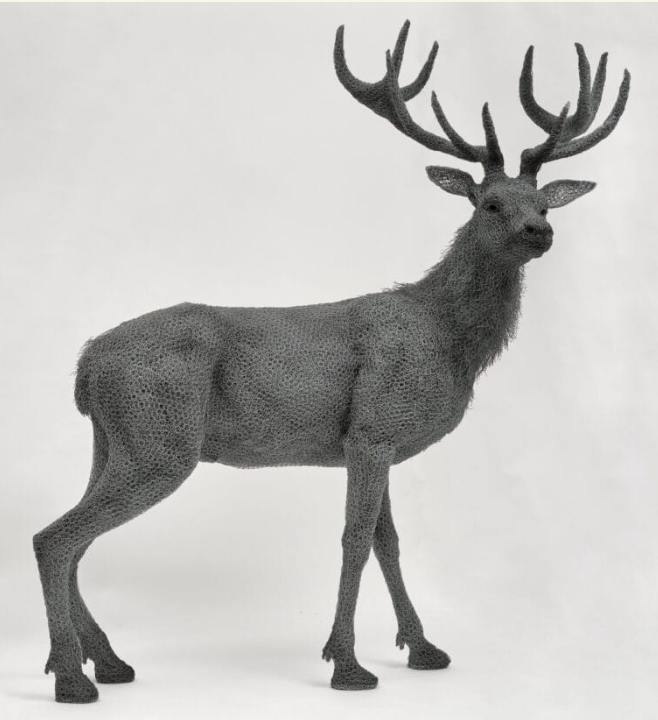
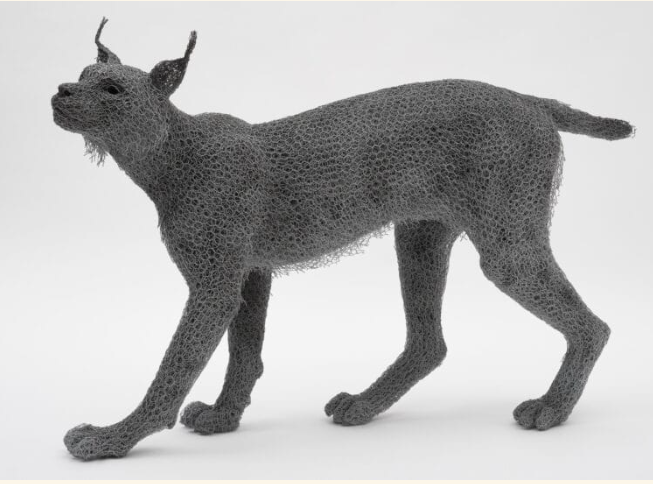
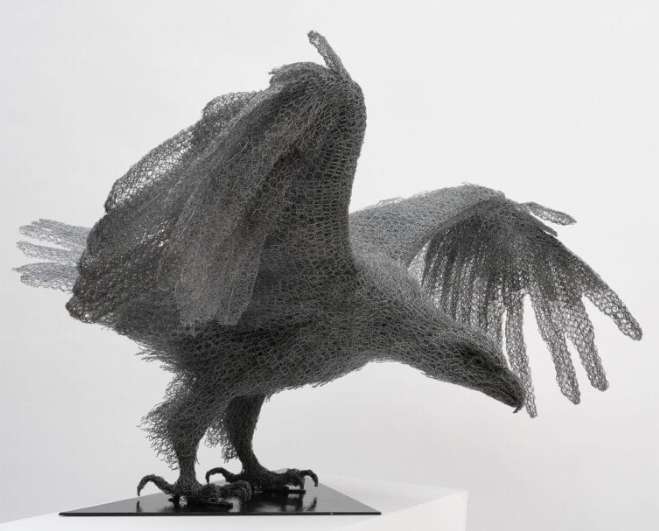
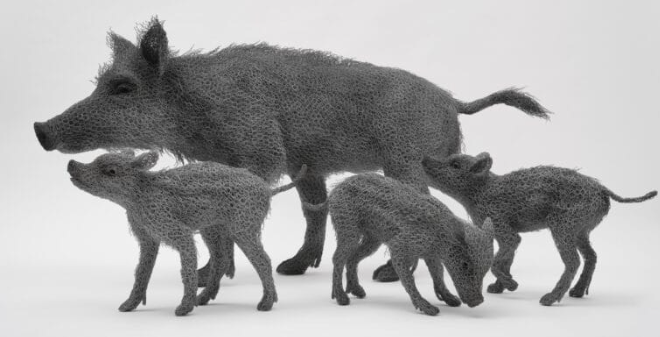
In Big Bad Wolf, Haste’s first solo museum exhibition, she delves into conservation, sustainability, and the controversial concept of rewilding. The animals that wander through the museum, including wolves, a stag, a hind, a white-tailed eagle, lynx, and wild boars, are all native to Northern Germany. While some are endangered, others are making a comeback, and Haste taps into a regional yet universal understanding of our delicate relationship with nature and how our actions impact it.


